
The Netherlands is the world’s second largest food exporter. Here is why that makes no sense.
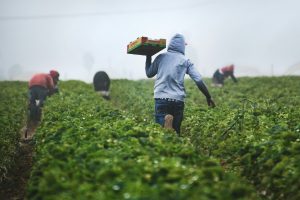
A country smaller than West Virginia feeds a significant portion of the planet. That sentence should not be true. But it is.
The Netherlands, home to 18 million people and roughly 41,000 square kilometres of land, is the world’s second largest exporter of agricultural products by value. Only the United States exports more food. The US is 240 times larger.
This is one of the most counterintuitive economic facts in the world, and understanding how it happened tells you a great deal about how the Dutch think about building competitive industries. It also has direct parallels with how the Netherlands approaches technology. If you want to see the same logic applied to semiconductors and AI, read our piece on why ASML is at the centre of the global chip war.
The numbers that should not add up
Dutch food exports reached $151 billion in 2024, an increase of nearly 5% on the previous year. The top categories are dairy, horticulture, and meat.
To put that in perspective, the Netherlands exports more food than agricultural giants including Brazil, Canada, Germany, and Australia. It does this from a country you could drive across in two hours.
Over 60% of Dutch land is used for agriculture, but the real story is what technology does with that land. The Netherlands leads globally in greenhouse farming, hydroponics, and vertical agriculture, producing more with significantly less space than traditional farming nations.
How they did it
After the Second World War, the Dutch government made a deliberate national decision: the country would never face food insecurity again. It invested heavily in agricultural research, infrastructure, and technology. That decision compounded over decades.
Wageningen University & Research has ranked number one in the world for agriculture and forestry in the QS World University Rankings, and twelve of the world’s biggest food and drink companies have established research and development facilities in the Netherlands, including Danone and Heinz.
Dutch farms use robots to pick soft fruit. Automated systems process meat and potatoes at industrial scale. Greenhouses run on recycled water and optimised light cycles. The result is extraordinary output from a country that, on paper, has no business being a farming superpower.
The Port of Rotterdam, the largest port in Europe, ties it all together. It gives Dutch agricultural exporters access to global markets faster and more cheaply than almost any competitor, with connections to more than 1,000 ports worldwide.
The part that gets more interesting
Here is the twist that surprises most people. A significant portion of what the Netherlands exports it did not actually grow itself.
The Dutch import raw agricultural products, add value through processing, repackaging, and mixing, and re-export them at higher margins. It is less a farming story and more a logistics and processing story dressed up as a farming story.
This is very Dutch. Rotterdam built its entire economy on being the entry point for goods flowing into Europe and taking a margin on every transaction. The agricultural sector runs the same playbook.
According to the USDA, the Netherlands is the largest importer of agricultural products within the EU, and continues to be the second largest exporter in the world, with exports including products produced domestically as well as imported goods processed and re-exported.
What it means for the Dutch economy today
The agricultural sector is not standing still. Pressure is growing on multiple fronts. The nitrogen crisis, a genuinely complex environmental dispute about livestock farming and protected nature areas, has forced difficult conversations about the future of Dutch farming. Some farmers have been asked to reduce or cease operations entirely.
At the same time, Dutch agri-tech companies are exporting their farming knowledge globally, turning the expertise developed at home into a new kind of product. The model is shifting from growing food to selling the systems that grow food. You can see the same pattern at work in our overview of key Dutch technology companies shaping 2026.
For a small country with limited land, the Netherlands has built something remarkable: a food export machine that consistently outcompetes nations with vastly more space, more sun, and more soil.
That is not an accident. It is a system, built deliberately over decades. And it is still running.


